

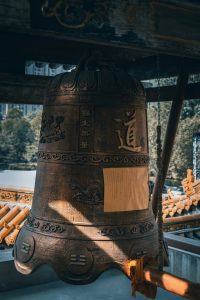
Oracle Bones and Bronze: The Exclusive Channel of Royal and Divine Power
During the Shang and Zhou dynasties, communication with heaven or ancestors was the privilege of the supreme ruler. Inscriptions and symbols carved on tortoise shells and animal bones or cast onto bronze ritual vessels were the earliest mediums with a “talismanic” nature. Their rarity and the difficulty of their craftsmanship meant this communication was costly, heavy, and non-replicable, serving solely the patriarchal aristocratic system and symbolizing supreme authority.
Silk and Bamboo Slips: The Dawn of Lightweight and Textual Form
As civilization advanced, lightweight silk and bamboo/wooden slips became the mainstream writing materials. This enabled the recording and carrying of complex images and texts, driving the textualization and systematization of talismanic systems. Early medical talismans are found on silk manuscripts unearthed from the Mawangdui Han tombs. However, silk was expensive, and slips were cumbersome, still limiting their widespread use among the common people.
The Paper Revolution: The “Democratization” and Standardization of Belief
The maturation and普及 of papermaking was the true turning point for talisman culture. Inexpensive yellow paper, in particular, became the ideal medium due to its cultural association with the “Earth” element in the Five Phases theory, representing the center. The accessibility of paper moved talisman creation from temples to markets, transforming it from an aristocratic exclusive to a solace accessible to the populace. Furthermore, paper’s ease of transport and standardization facilitated the compilation and dissemination of talisman lineages.
Conclusion
From the hard, sacred oracle bones to the light, ubiquitous paper, the evolution of the talisman medium is, in fact, a history of technological democratization and the popularization of faith. It shows us that the form and reach of a spiritual culture are always shaped by its material foundation. Today, when we hold a cinnabar-on-yellow-paper talisman, we hold not only belief but also an epic of material science spanning millennia.